

Lockdown Drills Through the Eyes of a Preschooler
By Olivia Roney Mitchell | Founder & CEO of Crouching Tigers and author of Lockdown Drill
Earlier this year, my three kids came home from school with a lot of questions.
Their schools had been practicing lockdown drills, and each of them had walked away with a completely different idea of what happened. One told me they were hiding from animals that might have rabies. Another thought it was a new version of hide-and-seek. The third thought it was a class-wide potty break.
None of them understood what they had just practiced, and that didn’t sit well with me.
Since then, I’ve spent time in child care centers and preschools talking with teachers and directors about lockdown drills. What I found worried me. Many programs weren’t sure how to run these drills with young children, and without meaning to, they were scaring kids with words like “intruder,” “bad guy” and “active shooter.”
I understand why we practice lockdown drills, and I fully support schools and child care centers preparing for emergencies. Many states now require them, and for good reason. What bothered me was how differently the drills were being explained from one classroom to the next. The teachers were clearly doing their best. They just didn’t have the tools to explain a very grown-up topic to very young children.
I’ve spent twenty years as an early childhood educator, author, and curriculum developer, so that got my attention fast. There was a gap, and I wanted to understand it.
I read everything I could find on lockdown drills, active shooter drills, and how they affect kids. I focused on kids under seven, the age group I’ve built my career around.
Some of what I found surprised me. Researchers are still studying the long-term effects, but a 2025 report from the National Academies found that the way we run and explain these drills can raise children’s stress and anxiety. School psychologists and school safety officers agree that developmentally appropriate, trauma-informed approaches help schools prepare kids without scaring them.
So I went back to basics and asked: what is a lockdown drill actually for?
The goal is to make the classroom look empty. Lights off, door locked, children out of sight.
Here’s the tricky part. It’s the only drill we ask young children to do in complete silence. Nobody has to be silent during a fire drill or a tornado drill. So of course kids start asking questions. Why do we have to be quiet? What are we hiding from?
When the grown-ups around them don’t have an answer that makes sense at their age, kids fill in the blanks on their own. Sometimes with rabid animals.
Taking topics that scare adults and teaching them to children in a way that feels safe and empowering is what I’ve done for twenty years at Crouching Tigers. It’s the thing I’m best at. Once I saw this gap, I couldn’t stop thinking about it.
The more I read, the clearer it became that the drills weren’t the problem. We were asking preschoolers to take part in them without giving their teachers a way to explain what was going on.
That led to months of research, a lot of conversations with teachers, more rewrites than I want to count, and finally a children’s book: Lockdown Drill: A Crouching Tigers Safety Story. It’s a story that looks at lockdown drills from a completely different angle.
In my next post, I’ll share the moment I stopped asking “How do we explain a lockdown drill to children?” and started asking a better question, the one that shaped the whole book.

About Olivia
Olivia Roney Mitchell is the Founder and CEO of Crouching Tigers. For twenty years, she has worked as an early childhood educator, author, and curriculum developer, teaching children ages 2–7 how to stay safe with lessons that feel fun instead of frightening. Lockdown Drill is her newest book.
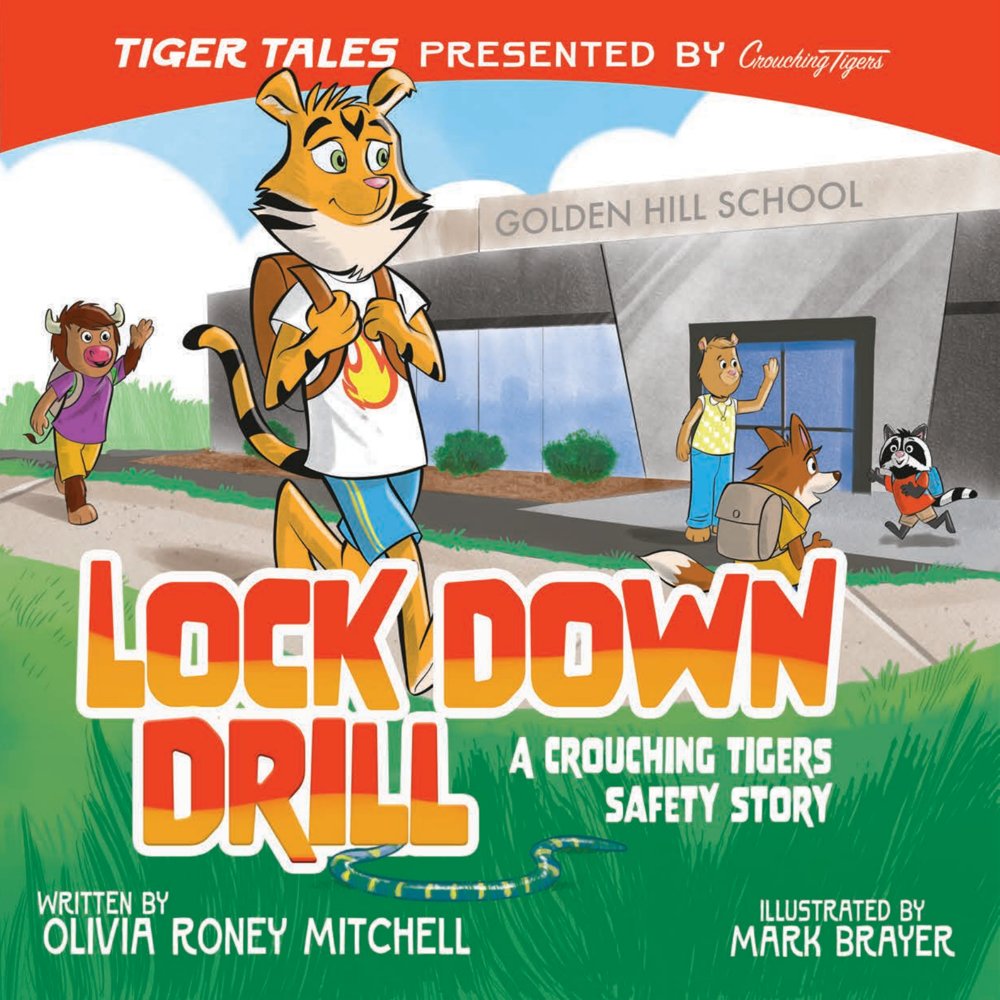
Lockdown Drill: A Crouching Tigers Safety Story is available for pre-order. It ships fall 2026.
Made for preschool through 1st grade, every book comes with a teacher guide, ready-to-send parent emails, a parent guide, and a printable classroom poster.
Ordering 10 or more for your school or center? Email info@inspiredkidsprograms.com for bulk pricing.